4-7-8 breath
4-7-8 breathing means breathing in through your nose for four seconds, holding for seven, then breathing out through your mouth for eight. Four rounds take about a minute and a quarter. In one small study, heart rate and blood pressure dipped a little straight afterwards. In another, anxiety fell in patients recovering from surgery.

How to do it
- Sit or lie down, and breathe out fully through your mouth.
- Close your mouth and breathe in quietly through your nose for a count of four.
- Hold your breath for a count of seven.
- Breathe out slowly through your mouth for a count of eight.
- That's one round. Do four, then breathe normally.
Safety. Sit or lie down for this one, and if the hold makes you dizzy or lightheaded, stop and breathe normally. If you're pregnant, or have a heart or lung condition, check with your doctor before practising breath holds.
What the research says
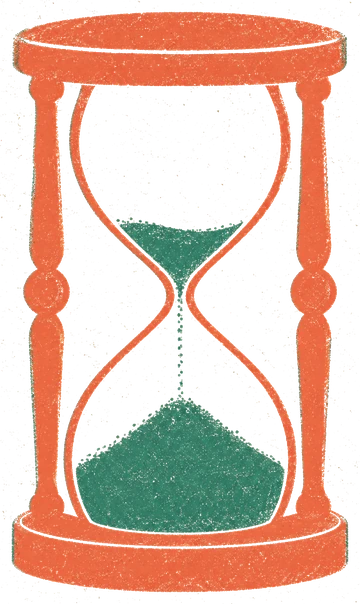
The breath out takes up almost half of each round, and at this pace you take only about three breaths a minute. Your heart slows a little on every breath out1.
In a 2022 study, 43 young adults did three short sets of 4-7-8 lying down. Straight afterwards, their heart rate and the top number of their blood pressure had dropped slightly, both in people who'd been getting enough sleep and in people who hadn't2. There was no group that skipped the breathing, so it's an early result.
In a 2023 trial with 90 patients recovering from weight-loss surgery, the group taught 4-7-8 ended up less anxious than a group taught deep breathing and a group given usual care3.
What we can't tell you is what the seven-second hold does on its own. We haven't found a study that tests it separately, so we don't claim it does anything special.
When to use it
Questions
Does 4-7-8 breathing help you fall asleep?
It's often suggested for sleep, and it's a calm thing to do in bed. But we haven't found a study that tests whether it helps you fall asleep faster, so we won't promise it. What one study did show is a small dip in heart rate straight afterwards2.
What if I can't hold for seven?
Count faster and keep the same shape. Or skip the hold, and make each breath out about twice as long as the breath in.
How many rounds should I do?
The app does four. In the 2022 study, people did six rounds, three times over, with a minute of normal breathing in between2.
Is it better than box breathing?
We haven't found a study that compares them. Box breathing has shorter holds, so some people find it an easier place to start.
Related
 Box breathing64 s · in 4 · hold 4 · out 4 · hold 4
 Physiological sigh45 s · in, a second sip in, a long breath out
 Legs up the wall120 s · lie back, legs up, stay
Read more
 Can't sleep because of anxiety? Start with your breath outBlog · 3 min read
 Panic attack at night: what to do when it wakes youBlog · 4 min read
 Why you can't get a full breath when you're anxiousLearn · 3 min read
- Yasuma F, Hayano J. Respiratory sinus arrhythmia: why does the heartbeat synchronize with respiratory rhythm? Chest, 2004. https://doi.org/10.1378/chest.125.2.683 (accessed 30 September 2026)
- Vierra J, Boonla O, Prasertsri P. Effects of sleep deprivation and 4-7-8 breathing control on heart rate variability, blood pressure, blood glucose, and endothelial function in healthy young adults. Physiological Reports, 2022. https://doi.org/10.14814/phy2.15389 (accessed 30 September 2026)
- Aktaş GK, İlgin VE. The effect of deep breathing exercise and 4-7-8 breathing techniques applied to patients after bariatric surgery on anxiety and quality of life. Obesity Surgery, 2023. https://doi.org/10.1007/s11695-022-06405-1 (accessed 30 September 2026)