Why you can't get a full breath when you're anxious
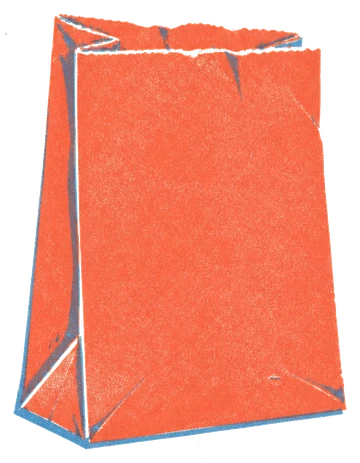
When you're anxious you may breathe fast, from the top of your chest. Your lungs can stay nearly full, so each breath in feels like it isn't enough, and breathing fast can blow off carbon dioxide, which makes fingers tingle and heads spin. Breathing out slowly, not in deeply, is the place to start.
The short version, in cards
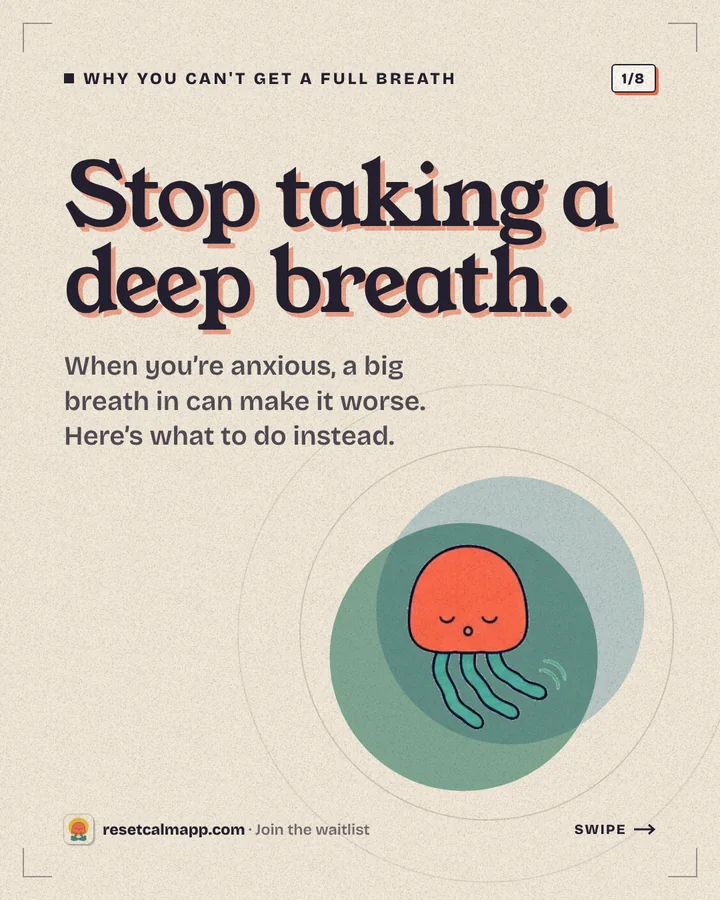
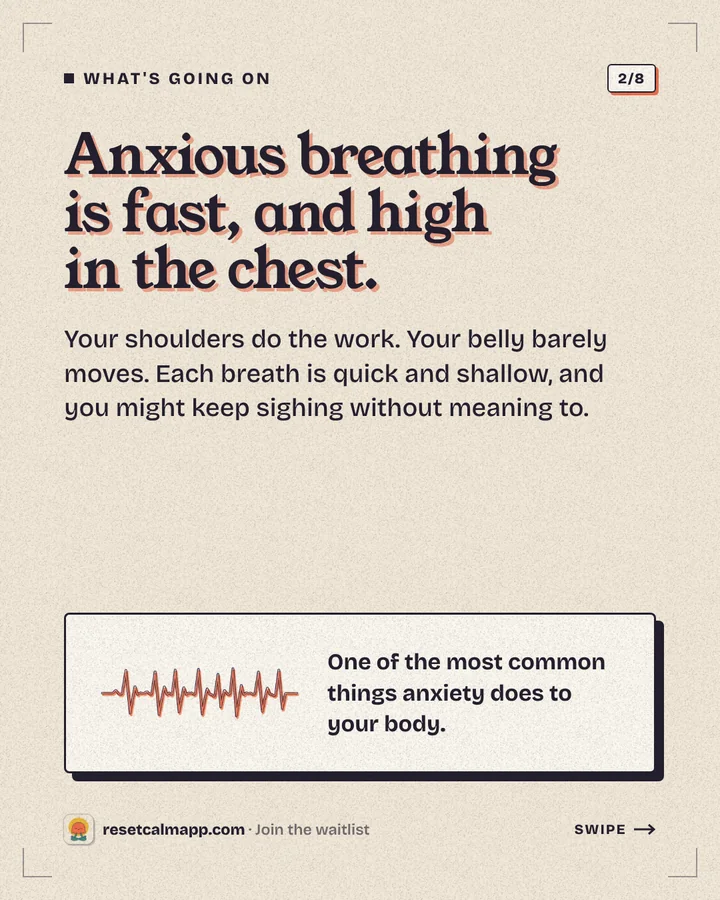
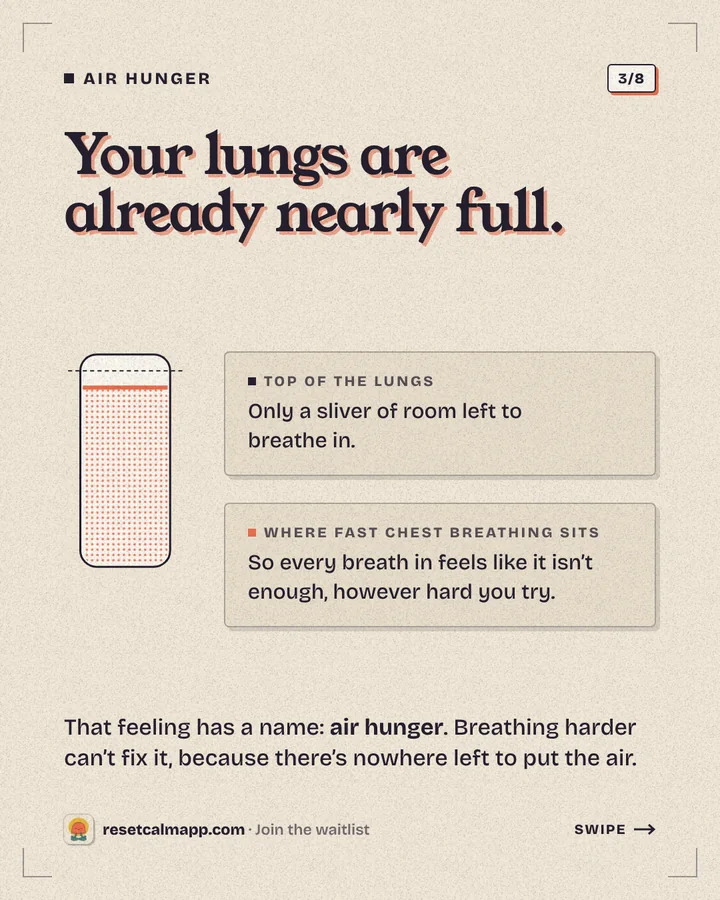
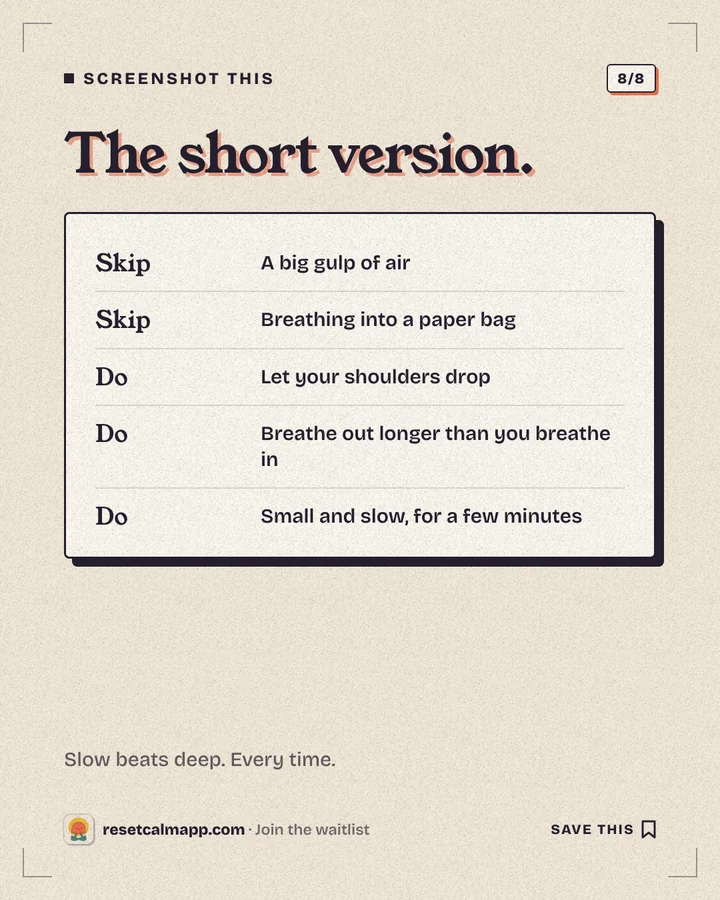
Read the cards as text
- Stop taking a deep breath. When you're anxious, a big breath in can make it worse. Here's what to do instead.
- Anxious breathing is fast, and high in the chest. Your shoulders do the work. Your belly barely moves. Each breath is quick and shallow, and you might keep sighing without meaning to. It's one of the most common things anxiety does to your body.
- Your lungs are already nearly full. Fast chest breathing sits near the top of what your lungs can hold, leaving only a sliver of room to breathe in, so every breath in feels like it isn't enough, however hard you try. That feeling has a name: air hunger. Breathing harder can't fix it, because there's nowhere left to put the air.
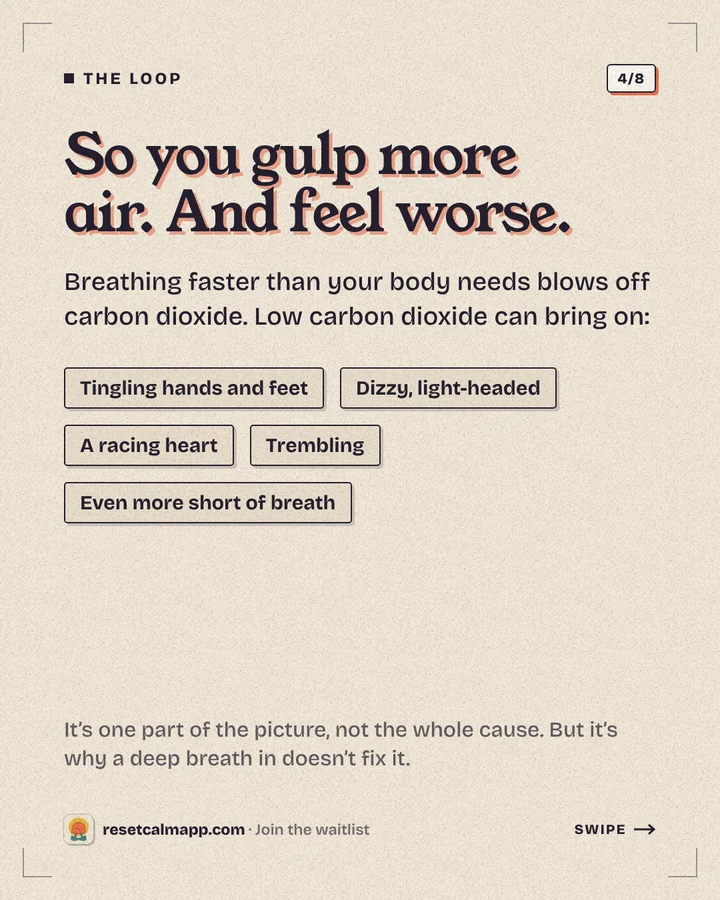
- So you gulp more air, and feel worse. Breathing faster than your body needs blows off carbon dioxide. Low carbon dioxide can bring on tingling hands and feet, dizziness, a racing heart, trembling, and even more shortness of breath. It's one part of the picture, not the whole cause. But it's why a deep breath in doesn't fix it.
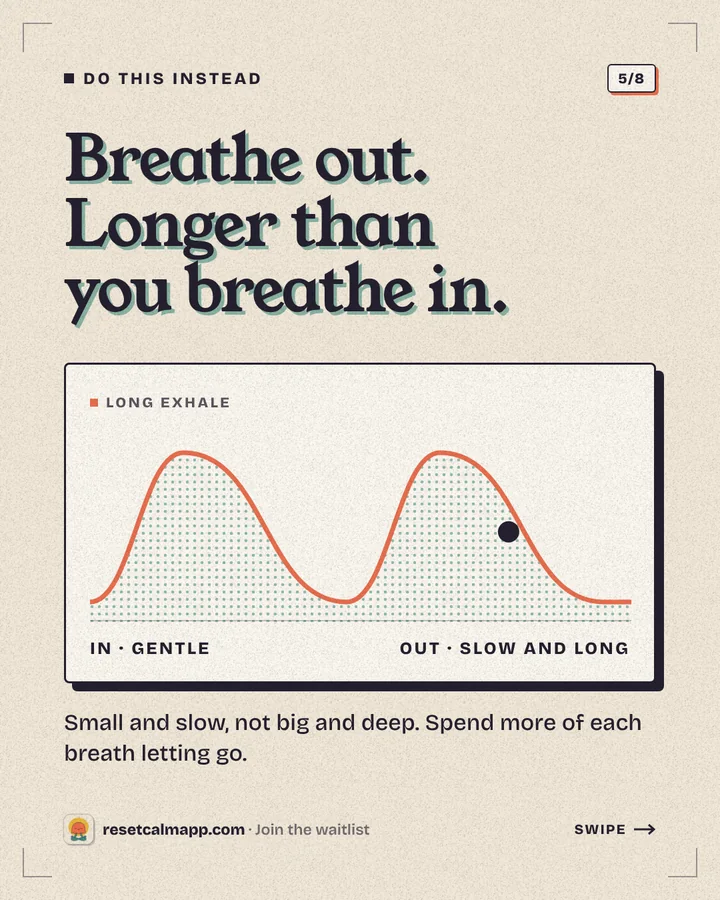
- Breathe out, longer than you breathe in. A long exhale: breathe in gently, then out slow and long. Small and slow, not big and deep. Spend more of each breath letting go.
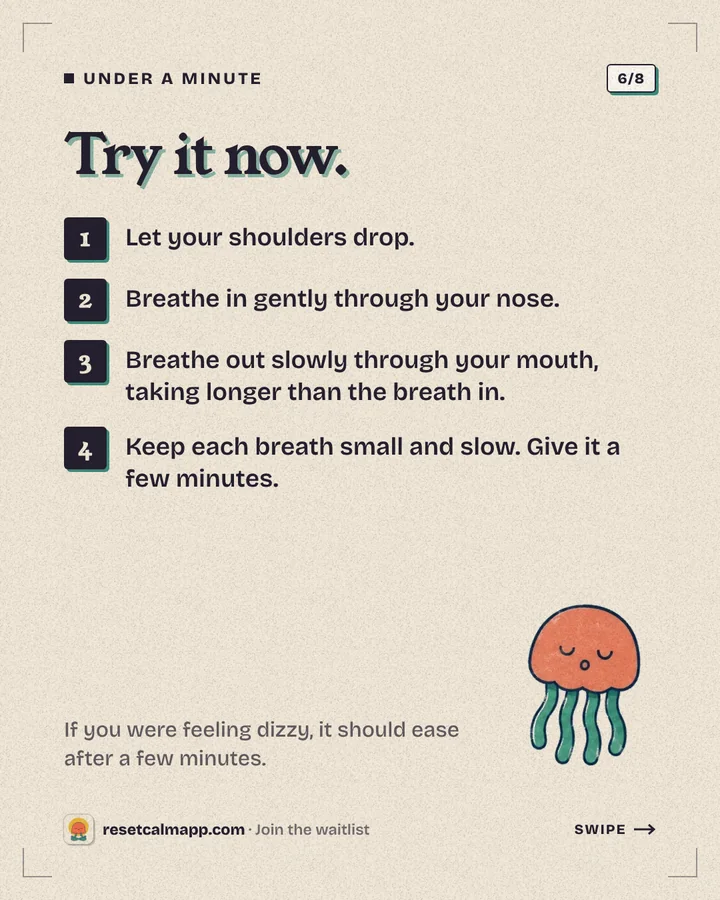
- Try it now. Let your shoulders drop. Breathe in gently through your nose. Breathe out slowly through your mouth, taking longer than the breath in. Keep each breath small and slow, and give it a few minutes. If you were feeling dizzy, it should ease after a few minutes.
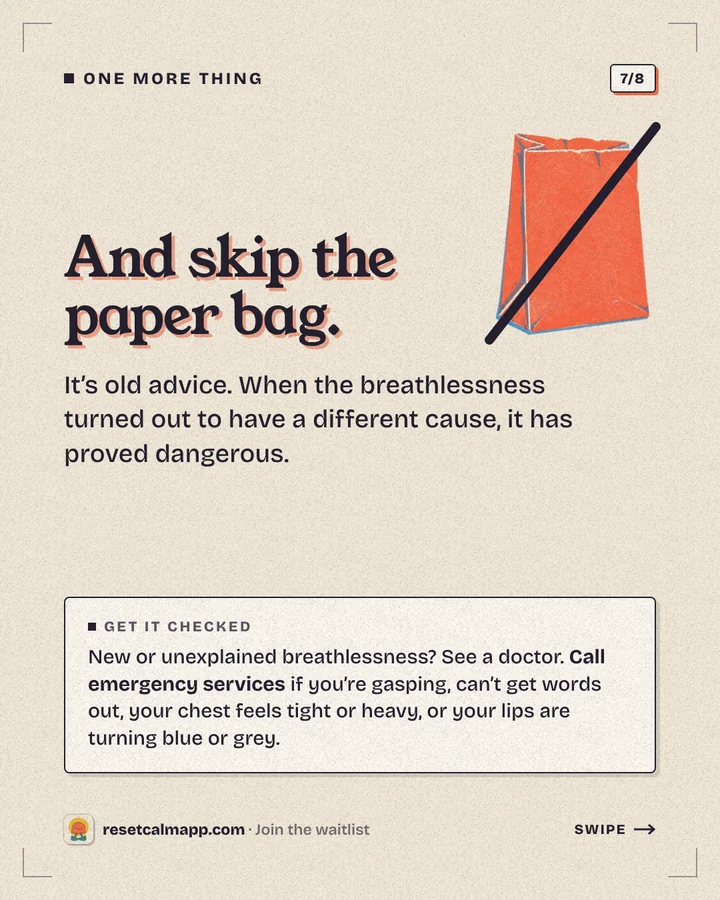
- And skip the paper bag. It's old advice, and when the breathlessness turned out to have a different cause, it has proved dangerous. New or unexplained breathlessness? See a doctor. Call emergency services if you're gasping, can't get words out, your chest feels tight or heavy, or your lips are turning blue or grey.
- The short version. Skip a big gulp of air. Skip breathing into a paper bag. Let your shoulders drop. Breathe out longer than you breathe in. Keep it small and slow, for a few minutes. Slow beats deep, every time.
What's going on
In people who overbreathe when they're anxious, breathing has often been described as fast and high in the chest, rather than low in the belly1.
In recordings of people with this breathing pattern, fast upper-chest breathing sits near the top of what the lungs can hold, leaving little room to breathe in2. That may be part of why each breath can feel unsatisfying, however hard you try.
It isn't the whole explanation, though. The feeling of not getting enough air can happen for other reasons too2.
Why you might feel tingly or dizzy
Breathing faster than your body needs blows off carbon dioxide. Low carbon dioxide can bring on shortness of breath, dizziness, a racing heart, trembling, and tingling or numbness in your hands and feet1.
It also cuts blood flow to the brain a little, which is likely why you can feel dizzy and unsteady3.
That isn't the whole story. The same feelings can come without low carbon dioxide, so treat it as one part of the picture, not the cause of panic2.
Why a bigger breath in doesn't help
Taking deep breaths can make low carbon dioxide and its symptoms worse, not better1.
So the way out is a slower, gentler breath, with more time spent breathing out. Try breathing out for longer than you breathe in. If you were feeling dizzy, that should ease after a few minutes4.
Don't breathe into a paper bag. It's old advice, and when the breathlessness had a different cause, it has proved dangerous5.
Try this
- Let your shoulders drop.
- Breathe in gently through your nose.
- Breathe out slowly through your mouth, taking longer than the breath in4.
- Keep each breath small and slow, not deep, and give it a few minutes.
When to get help. Don't try to work out the cause of breathlessness yourself: see a GP6. Call 999 if you're gasping, choking or can't get words out, your chest feels tight or heavy, your lips or skin are turning very pale, blue or grey, or you feel suddenly confused6. Contact NHS 111 if you're coughing up blood or have pain or swelling in one leg6.
Try it
 Pursed-lip breath45 s · in 2 · out through pursed lips 4
 Box breathing64 s · in 4 · hold 4 · out 4 · hold 4
 4-7-8 breath76 s · in 4 · hold 7 · out 8
Questions
Is it normal to feel like you can't breathe with anxiety?
It's common. A panic attack is one of the listed causes of shortness of breath6. But don't assume: if it's new, get it checked.
What is air hunger?
The feeling that you can't get a satisfying breath, however hard you try. It's part of dysfunctional breathing, a pattern often seen with anxiety2.
Why do I keep sighing?
Frequent sighing is part of the breathing pattern often seen in people with panic1.
Should I take a deep breath?
Slow is better than deep. Deep breaths can make the dizziness and tingling worse1.
Read next
 What a panic attack is, and what it feels likeLearn · 3 min read
 How to calm anxiety fast: five things you can start in under a minuteBlog · 3 min read
 Panic attack at night: what to do when it wakes youBlog · 4 min read
- Meuret AE, Ritz T. Hyperventilation in panic disorder and asthma: empirical evidence and clinical strategies. International Journal of Psychophysiology, 2010. https://pmc.ncbi.nlm.nih.gov/articles/PMC2937087/ (accessed 30 September 2026)
- Boulding R, Stacey R, Niven R, Fowler SJ. Dysfunctional breathing: a review of the literature and proposal for classification. European Respiratory Review, 2016. https://pmc.ncbi.nlm.nih.gov/articles/PMC9487208/ (accessed 30 September 2026)
- Vidotto LS, et al. Dysfunctional breathing: what do we know? Jornal Brasileiro de Pneumologia, 2019. https://pmc.ncbi.nlm.nih.gov/articles/PMC6534396/ (accessed 30 September 2026)
- NHS inform. Panic self-help guide. https://www.nhsinform.scot/illnesses-and-conditions/mental-health/mental-health-self-help-guides/panic-self-help-guide/ (accessed 30 September 2026)
- Callaham M. Hypoxic hazards of traditional paper bag rebreathing in hyperventilating patients. Annals of Emergency Medicine, 1989. https://doi.org/10.1016/s0196-0644(89)80515-3 (accessed 30 September 2026)
- NHS. Shortness of breath. https://www.nhs.uk/symptoms/shortness-of-breath/ (accessed 30 September 2026)